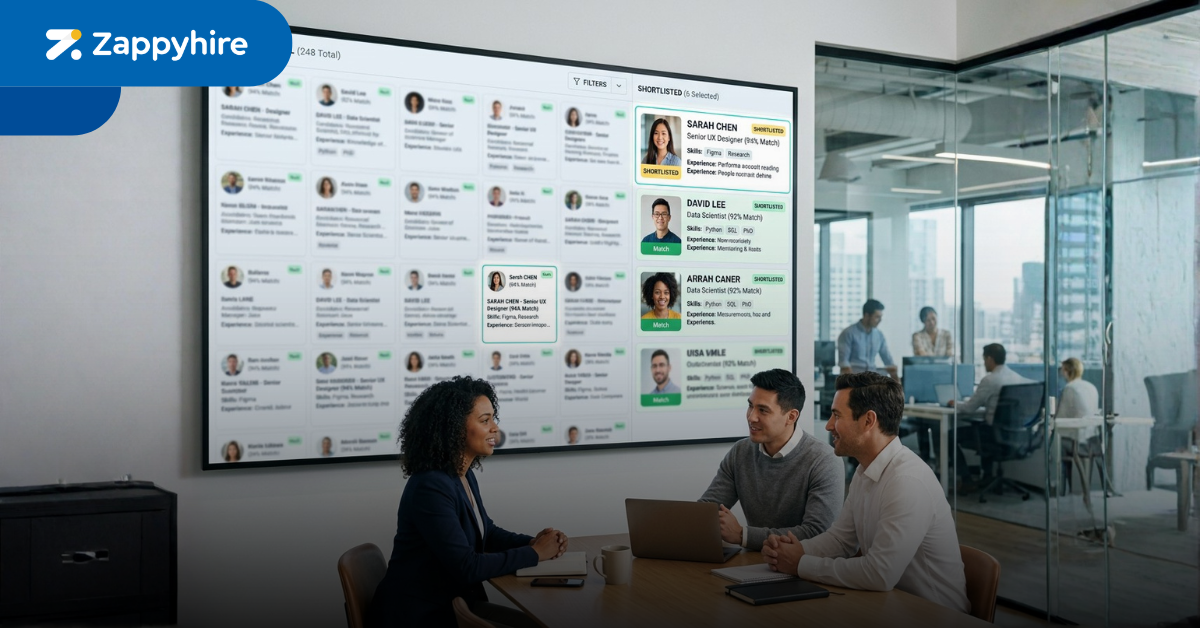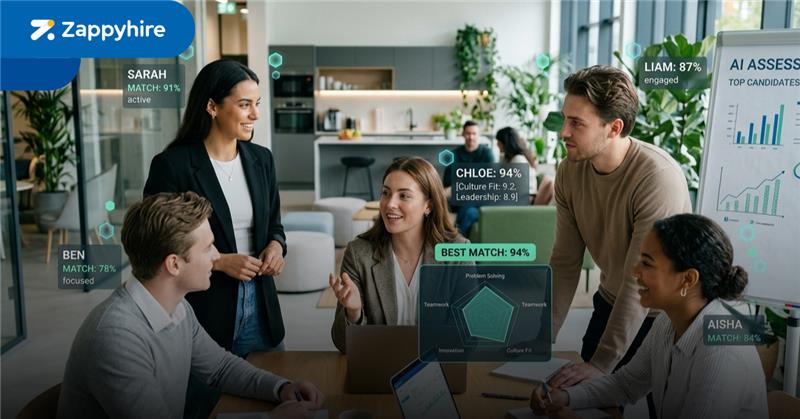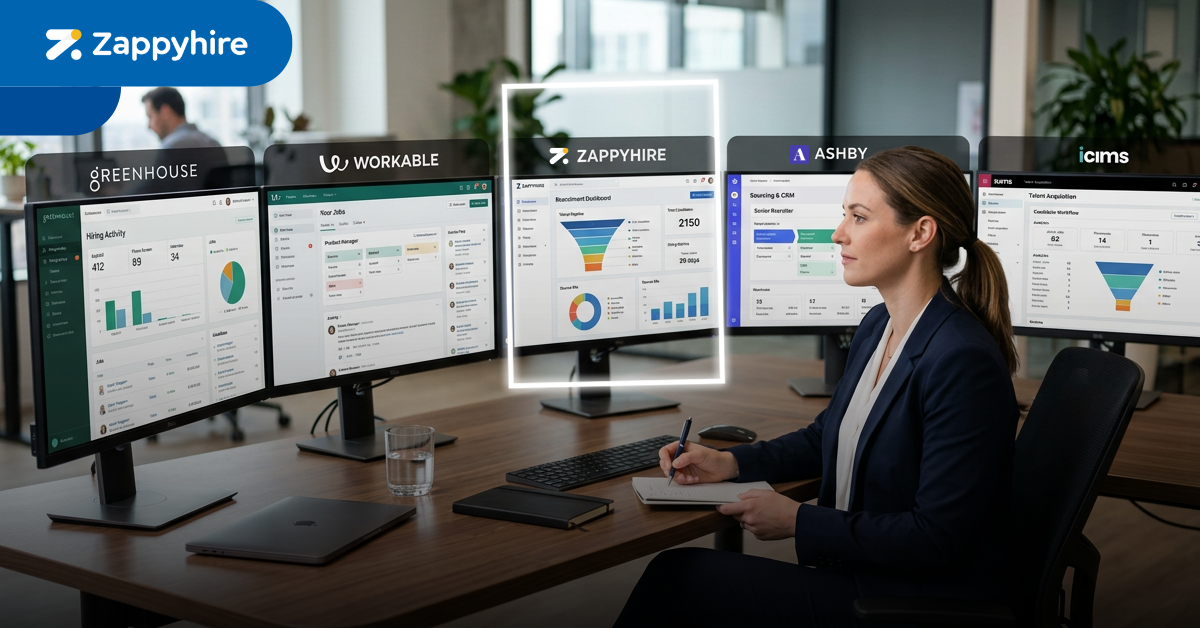
Recruiting at enterprise scale is very different from the talent acquisition needs of a small business.
Large companies often process thousands of candidates per month across multiple business units and geographies, making it essential to have a platform that can handle applications in high volume, easy candidate tracking, complex workflows and strict compliance requirements.
“AI will become a core enabler in recruitment — automating processes while enabling smarter decision-making.”
— Rachit Chandra, Director APAC Talent Acquisition Head, Cloudera
However, not all ATS platforms are built for the realities of enterprise hiring.
How ATS Platforms for Large Companies Differ From SMB/Basic ATS
Enterprise hiring involves higher application volumes, multiple hiring teams, layered approvals, regional compliance needs, and deeper integrations with the rest of the HR ecosystem.
“When hiring volumes increase, manual processes don’t break immediately – they slow down gradually. AI is what keeps that from happening.”
— Deepu Xavier, Co-founder, Zappyhire
A basic ATS may work well for a small team hiring for a few roles at a time. But once hiring becomes multi-location, high-volume, or process-heavy, companies need a system that can support scale without creating more manual work for recruiters.
| Area | What large companies need from an ATS | Where basic ATS platforms often fall short |
|---|---|---|
| Scalability | Handle high-volume hiring, multiple openings, large teams, and layered approvals without slowing down. | Not built to handle huge loads of data, system may break. |
| Workflow flexibility | Support different hiring flows for departments, roles, locations, and hiring types. | They often push every team into the same fixed process. |
| AI and automation | Automate repetitive tasks like resume screening, candidate ranking, scheduling, updates, and follow-ups. | They may offer basic automation, but recruiters still end up doing a lot manually. |
| Integrations | Connect smoothly with HRMS, payroll, assessments, calendars, SSO, job boards, and other hiring tools. | Limited integrations can lead to duplicate work and scattered hiring data. |
| Reporting and analytics | Give leaders clear insights into hiring funnels, sources, recruiter performance, drop-offs, and time-to-hire. | They usually provide basic reports, making it harder to spot bottlenecks. |
| Compliance and security | Offer audit trails, role-based access controls, consent management, privacy settings, and strong security. | They may not have enough governance or security depth for enterprise hiring. |
| Candidate experience | Create a branded, mobile-friendly, and engaging journey with timely updates and personalized communication. | Candidate journeys can feel generic, manual, or inconsistent at scale. |
Best Applicant Tracking Systems for Large Companies
In this analysis, we’ve synthesized official vendor product pages, security/compliance pages, publicly visible pricing signals, G2 ratings and implementation data, and public G2 user-review excerpts.
Quick Glance at the Top 10 ATS for Large Companies
| Platform | G2 rating | Clientele | Standout features |
|---|---|---|---|
| Greenhouse | 4.4/5 | Canonical, DoorDash, Agoda, Cloudflare | Structured hiring, Real Talent, 118 integrations, audit log |
| Darwinbox | 4.4/5 | PwC India, Porter, TCS, PhysicsWallah | AI-native HCM, mobile-first UX, configurable workflows |
| iCIMS Talent Cloud | 4.2/5 | Walmart, Amazon, Apple, CVS Health, Goldman Sachs | 800+ partner technologies, Frontline AI, strong global hiring stack |
| Workday Recruiting | 3.7/5 | HP, Shell Group, The Walt Disney Company, Accenture PLC | Native HCM continuity, end-to-end workflow inside Workday |
| Zappyhire | 4.5/5 | Maruti Suzuki, Federal Bank, Himalaya Wellness, Shaadi.com | AI screening, high configurability, automated video interviews, candidate ranking, recruiting analytics |
| Avature | 4.4/5 | L’Oreal, SODEXO, Barclays, McKinsey&Co | Extreme configurability, strong CRM, multi-use talent platform |
| PageUp | 4.4/5 | 7-Eleven Hong Kong, Able Australia, Virginia Tech | Recruitment marketing, onboarding, analytics, ISO/GDPR posture |
| Jobvite | 4.0/5 | MedSpeed, VON Canada, Umpqua Bank | Texting, AI matching, analytics, internal mobility |
| ADP Recruiting Management | 4.2/5 | Capstone Logistics, Seaboard Corporation, Kenan Advantage Group | ADP ecosystem, partner integrations, Recruitment + HR continuity |
| Ashby | 4.7/5 | Snowflake Technographics, Notion, Figma, Deel | BI-grade analytics, ATS+CRM+scheduling in one, modern AI |
Greenhouse
Greenhouse is the most balanced best-of-breed option in this set for large companies that want structured hiring discipline without going all the way into an HCM-suite deployment.
Greenhouse also has a broad integration ecosystem, connecting with tools such as ADP Workforce Now, Amazon Redshift, Amazon S3, Asana, Adobe Acrobat, Ashby, and Acc Billing. This makes it easier for hiring teams to connect recruitment data with HR, analytics, storage, productivity, and document workflows.
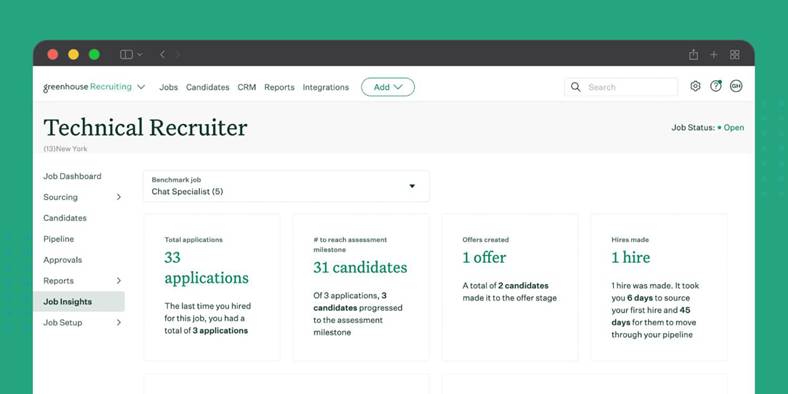
They also emphasize structured hiring, AI-powered hiring support, sourcing-to-onboarding
coverage, and “Real Talent” features for talent matching and fraud/spam detection.
Even though Greenhouse officially markets to companies “of all sizes,” its security/governance language, and customers’ company sizes point most strongly to mid- to-large companies.
Core features – Structured hiring, sourcing and CRM, interview kits and scorecards, scheduling, reporting/analytics, DEI-oriented hiring controls, onboarding, and the Real Talent layer.
Strengths – Enterprise-ready governance, broad integrations, strong UX, and one of the clearest structured-hiring philosophies in the market.
Weaknesses – Buyers regularly mention reporting limitations, clunky interface, manual back-end work in certain workflows, and rising price.
Scalability/security/compliance – SOC 1 Type 2, SOC 2 Type 2 report, and ISO 27001:2013/ISO 27701:2019 certification
Darwinbox
Darwinbox is most compelling when its recruiting module is purchased as part of an AI- native HCM transformation rather than as a standalone ATS decision.
It also supports integrations with enterprise identity, learning, and attendance systems such as Microsoft Entra ID, Azure Active Directory Domain Services, Skillsoft Percipio Platform, and other.
Basically, it is an AI-native HCM for global enterprises, while the recruitment product centers on recruiter productivity, candidate experience, and configurable workflows.
When it comes to who exactly it is for, Darwinbox fits large enterprises and fast-growing regional or multinational employers that want recruiting, onboarding, core HR, payroll, and analytics on one platform.
Core features – Requisitions, job posting, offer letters, onboarding, mobile recruiting/onboarding support, automation, analytics, and broad workflow configurability.
Strengths – Strong HCM context, customizable workflows, mobile UX, and unified HR/recruiting data.
Weaknesses – Learning curve, report/configuration complexity, and performance lag appear consistently in customer reviews.
Scalability/security/compliance – SAML-based SSO, Microsoft Entra ID integration, Infisign SSO, SHA-512 encryption, AES encryption.
iCIMS Talent Cloud
iCIMS remains one of the clearest enterprise-grade talent acquisition platforms in the market. They state that more than 4,400 companies across 200 countries – including a quarter of the Fortune 500 – use the platform, and the product architecture spans ATS, CRM, employer branding, high-volume hiring, and AI layers.
iCIMS also connects with more than 800 partner technologies and supports thousands of integrations.
Some of its integrations include Accurate, ADP Workforce Now, Calendly, helping enterprise teams manage background checks, scheduling, e-signatures, job distribution, identity management, and HR data flow.
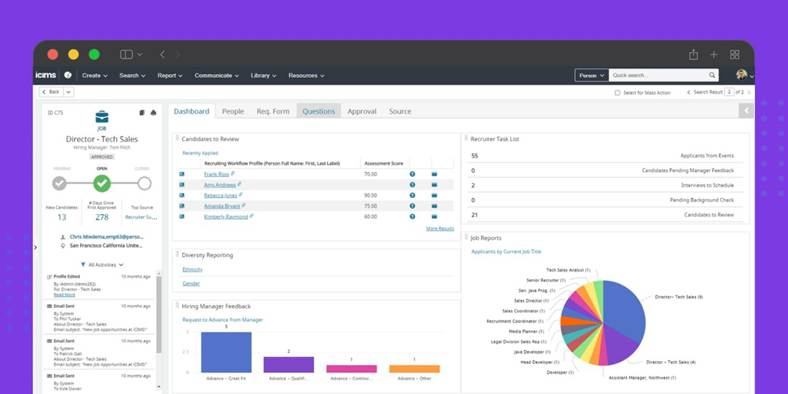
Squarely aimed at enterprise TA teams, especially those with global, multilingual, or high- volume hiring requirements, it’s main focus industries are retail, hospitality, healthcare, manufacturing, and finance.
Core features – ATS, CRM, career sites/employer branding, text recruiting, onboarding, offer management, high-volume/frontline AI, and AI copilots.
Strengths – Global reach, high-volume support, multilingual capabilities, partner ecosystem, and mature compliance/security posture.
Weaknesses. The tradeoff is complexity – include a steep learning curve, limited customization in some contexts, high-volume data export constraints, and time- consuming setup, according to reviewers.
Scalability/security/compliance – ISO/IEC 27701 – Privacy Information Management System (PIMS), SOC 2, Type II
Workday Recruiting
Workday Recruiting is best understood as a strategic extension of Workday HCM, not as a full-on ATS optimized first for recruiter delight.
It’s an end-to-end, AI-powered recruiting workflow integrated with the larger Workday environment. That integration is its biggest advantage: candidate, hiring, onboarding, and employee records can run through a common data model.
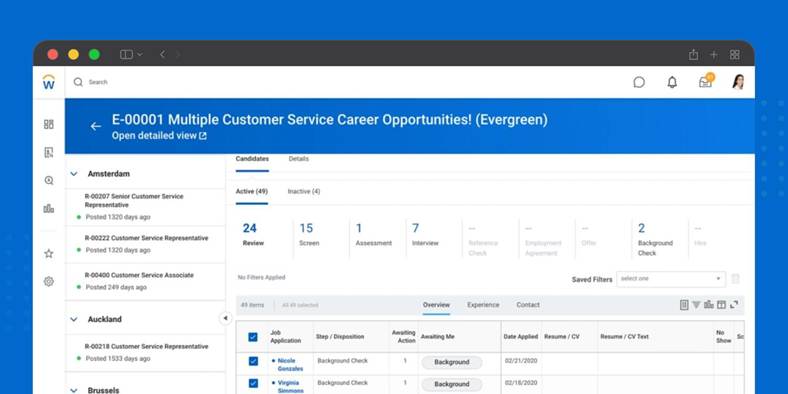
Workday Recruiting fits very large organizations that already run Workday HCM or explicitly want to consolidate recruiting into the Workday stack.
Core features – Requisition approvals, sourcing, candidate tracking, interview feedback, offers, onboarding continuity, analytics, and multilingual support.
Strengths – Strong process structure, broad enterprise governance, and better data continuity than best-of-breed ATS tools if Workday HCM is already the source of truth.
Weaknesses – Reviewers repeatedly point to UX feeling outdated, inconsistency across features, rigidity, extra clicks, and a longer learning curve.
Scalability/security/compliance – APEC Privacy Framework, GDPR , TRUSTe certification, ISO 27001.
Zappyhire
Zappyhire is the most purpose-built option here for automation-heavy, high-volume hiring programs, especially in use cases like campus, banking, retail, tech, manufacturing and frontline or blue/grey-collar recruiting.
With a global user base of 105,000+, Zappyhire boasts agentic AI-powered end-to-end recruiting automation for large enterprises, AI-enabled screening, highly configurable drag- and-drop interface, automated video interviews, a stellar candidate experience, very thorough analytics, job-board distribution, and a multilingual recruiting chatbot functionality.
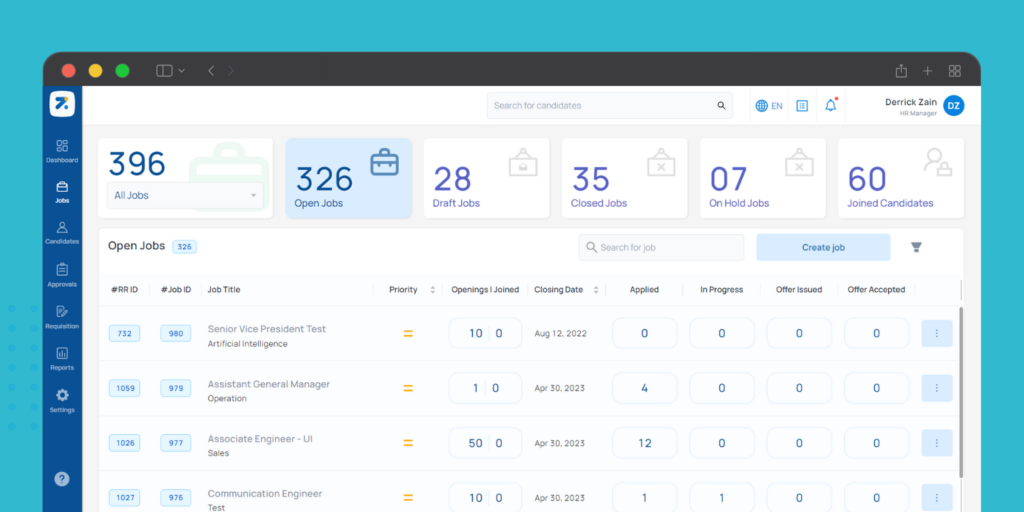
The platform facilitates robust third-party integrations with SSOs, communication channels, assessment platforms, HRMS, background verification vendors, calendars, e- signature enablers and job boards – offering one-click distribution.
Core features – Automated screening, semantic resume parsing, candidate auto-ranking, conversational chatbot, AI/robotic video interviews, 360-degree candidate profiles, recruiting marketing, and reporting/analytics.
Strengths – Automation at every step, candidate processing efficiency, no info duplication, role-based access, and practical, bird-eye view analytics. And reviewers have pointed out extremely strong integration and post-integration support.
Weaknesses – Public reviews call out slower requisition/job publishing.
Scalability/security/compliance – ISO 27001, SOC Type 1, SOC Type 2, GDPR, and VAPT.
| 💡 Enterprise Partner Note! Companies looking to scale global, cross-border teams can leverage the native Zappyhire and Deel integration. Existing Deel clients can unlock an exclusive 10% discount on all of Zappyhire’s annual subscription plans to unify global payroll, compliance, and recruitment automation! |
Avature
Avature is a deeply configurable platform and one of the strongest fits for multinational enterprises with unusual workflows, multiple recruiting motions, and strong CRM needs.
This platform is best suited for talent acquisition and talent management with sourcing, recruitment marketing, career sites, ATS, video interviewing, campus/events recruiting, referral management, onboarding, mobility, and contingent workforce modules.
Avature also integrates with tools such as DocuSign, eSkill, Oracle Talent Management Cloud, formerly Taleo, SHL, and Twilio, supporting e-signatures, assessments, HR suite connectivity, candidate evaluations, and communication workflows.
It’s best suited for global enterprises with complex process logic, local variations, and broad talent-use cases spanning ATS, CRM, events, referrals, onboarding, and internal mobility.
Core features – Bespoke ATS workflows, CRM/talent pools, marketing/career sites, onboarding, campus/events, internal mobility, and contingent workforce support.
Strengths – Configurability, breadth of features for internal recruitment, and strong CRM capability.
Weaknesses – Reviewers repeatedly flag learning curve, reporting usability, slow or reactive support, and high price.
Scalability/security/compliance – ISO 27001 and SOC 2 certified.
PageUp
PageUp is a strong enterprise platform for institutions and organizations that care about candidate journeys, compliance, and broader talent processes, not just ATS workflows.
It’s an experience-driven platform spanning recruitment marketing, AI career sites, CRM, recruitment management, onboarding, learning, performance, succession, and analytics.
PageUp also connects with platforms such as LinkedIn Learning, Microsoft Teams, and Workday HCM, helping organizations link recruitment with learning, collaboration, and broader HR processes.
It’s best suited for ANZ-origin enterprise organizations, especially higher education, healthcare, government, and globally distributed institutions.
Core features – Recruitment marketing, ATS, onboarding, analytics, learning, performance, and configurable workflows.
Strengths – Good balance of configurability, candidate experience, support, and institutional/process rigor.
Weaknesses – Reviewers report more regional integration friction than some global rivals, KPI/reporting rigidity, and a learning curve for infrequent users.
Scalability/security/compliance – ISO 27001, ISO/IEC 27001:2013. ISO 27001
Jobvite
Jobvite is a good fit for talent acquisition teams that want a configurable suite rather than just a plain ATS.
Their emphasis is on sophisticated hiring teams, regulated industries, recruitment marketing, career sites, AI-powered candidate matching, AI Companion, 60+ dashboards and reports, internal mobility, and compliance-heavy environments.
Its integration ecosystem includes tools such as Gem, HireRight, Indeed Employer Branding Ads, LinkedIn Recruiter, and Workday Recruiting, supporting sourcing, background checks, employer branding, recruiter workflows, and HR system connectivity.
This puts Jobvite in the middle of the pack: broader than an ATS-only tool, faster to deploy than the heaviest enterprise suites, but not as uniformly loved on UX as Greenhouse, Zappyhire or Ashby.
Core features – ATS, career sites, CRM, AI matching, analytics, internal mobility, and onboarding.
Strengths – Recruiter usability, candidate management, texting, and solid suite breadth.
Weaknesses. Reviewers flag onboarding setup work, API friction, reporting limitations, and some customer-service speed concerns.
Scalability/security/compliance – SOC 2 Type 2, ISO/IEC 27001, Cloud Security Alliance, GDPR & CCPA
ADP Recruiting Management
ADP Recruiting Management is also one of the platforms that is best viewed as part of an ADP-led workforce platform decision rather than as a standalone best-of-breed ATS decision.
They describe Recruiting Management as part of the ADP Talent Acquisition suite, designed to connect organizations with more candidates, provide a personalized hiring experience, and identify the best fits using advanced technology, contextual AI, and streamlined workflows.
It is best suited for large(or even mid-size) organizations already committed to ADP for payroll/HR or explicitly seeking a single-vendor HR/payroll/talent stack.
Core features – Candidate attraction, nurturing and hiring workflows, contextual AI, personalized experiences, and broad ADP ecosystem connections.
Strengths – Tight alignment with ADP payroll/HR, marketplace/API ecosystem, and broader operational continuity.
Weaknesses – The public recruiting-specific evidence is thinner than for most peers in this comparison; that means less transparent ATS-only review depth, less public feature granularity, and more dependence on vendor-led demos for feature validation.
Scalability/security/compliance – Maintains ISO/IEC 27001 and ISO/IEC 27701 certifications for select services only.
Ashby
Ashby is the most modern, analytics-first recruiting platform in this list.
They emphasize a true all-in-one model – ATS, CRM, sourcing, scheduling, analytics, and AI – with deep Workday connectivity, BI-grade reporting, and AI embedded “in every layer.”
Ashby serves ambitious teams across software, internet, security, and modern scaling companies, and also supports integrations with Workday, Zapier, Slack, and Google Workspace, making it easier for teams to connect recruiting workflows with HRIS data, automation, communication, and day-to-day productivity tools.
Core features – ATS, CRM, sourcing, scheduling, BI-grade analytics, headcount planning, AI assistance/automation, fraud detection, and Workday/HRIS integrations.
Strengths – Best-in-class analytics for many teams, modern UX, strong all-in-one economics, fast product velocity, and meaningful automation.
Weaknesses – Learning curve, premium pricing at higher tiers, and a platform depth that can feel excessive for simpler hiring motions.
Scalability/security/compliance – SOC2 compliant and Type 2 audited annually.
Key Features to Look for in an ATS for Large Companies
Zappyhire’s Recruitment Trends Report 2026 shows why good features now matter more for enterprise hiring team as 68% report improved recruitment efficiency due to AI.
“AI acts as a force multiplier by streamlining repetitive work and accelerating insights; however, accountability and final decision-making continue to rest with human intelligence.”
— Arijit Deb, Head of India Talent Acquisition, Manhattan Associates
Here are the key features to look for before shortlisting an ATS.
1. Scalability for High-Volume Hiring
Large companies often handle thousands of candidates across different departments, locations, and job roles. The system should be able to manage high-volume hiring without slowing down recruiters or creating process bottlenecks.
Look for features like bulk candidate processing, automated screening, candidate ranking, configurable hiring pipelines, and workflows that can support multiple requisitions at the same time.
2. Configurable Workflows and Approval Chains
The platform should allow teams to customize the different stages of the recruitment process, including requisition approvals, screening, interviews, feedback collection, offers, and onboarding handoffs .
“We implemented an ATS to automatically apply criteria and flag ineligible applications, leaving us with a qualified pool of candidates. The time saved has been substantial. We rely heavily on Zappyhire end-to-end, from applications to scheduling, and we’re also using AI video interviews to compress the later stages of hiring.”
— Sangeeta Singh, Director of Talent Acquisition, Shaadi(dot)com) Read their success story.
Enterprise hiring rarely follows one standard process. The workflow for campus hiring may be different from senior leadership hiring, frontline hiring, or internal mobility.
The ATS should allow teams to customize pipelines, hiring stages, approval flows, interview rounds, offer processes, and role-based permissions.
This helps different departments follow their own hiring process while still keeping everything organized in one system.
3. AI-Powered Screening and Candidate Matching
AI is now one of the most important features in ATS platforms. Instead of manually reviewing every application, recruiters should be able to use AI resume parsers to screen
resumes, match candidates to job requirements, rank applicants, and identify the most relevant profiles faster.
For high-volume roles, the ability toautomate candidate shortlisting can help recruiters move qualified applicants forward faster without manually reviewing every resume.
4. Automation Across the Recruitment Funnel
Watch out for capabilities of automating repetitive tasks such as resume parsing, candidate communication, interview scheduling, status updates, reminders, and offer- related workflows.
Beyond screening, there are several examples of AI in the recruitment lifecycle, including candidate matching, interview scheduling, automated communication, talent rediscovery, and hiring analytics.
Automation reduces recruiter workload, improves turnaround time, and ensures candidates are not left waiting for updates.
5. Strong Integrations with HRMS and Other Tools
It should integrate smoothly with HRMS, payroll, assessment tools, background verification vendors, calendars, e-signature tools, communication platforms, SSO, and job boards.
An ATS with job board integration can also help large companies distribute openings faster, reduce manual posting work, and keep applicant data flowing back into one centralized system
Strong integrations reduce duplicate data entry, prevent information silos, and ensure that candidate data flows smoothly from application to onboarding.
6. Advanced Reporting and Hiring Analytics
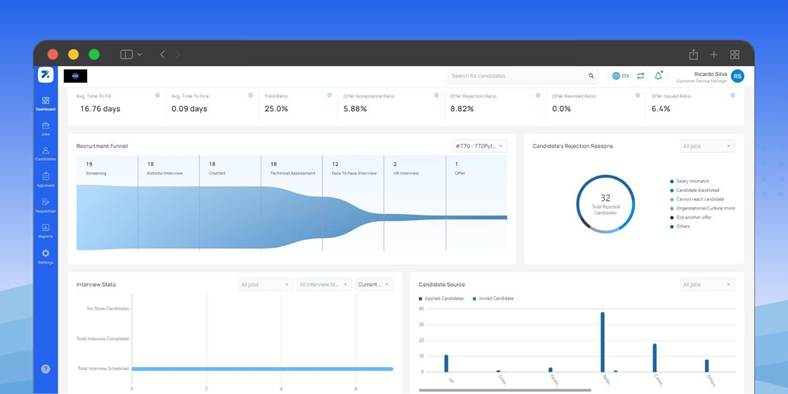
Large companies need visibility into every stage of recruitment. The ATS should provide dashboards and reports on key metrics such as source effectiveness, recruiter productivity, time-to-hire, offer acceptance rate, candidate drop-offs, diversity metrics, and hiring funnel performance.
But standard dashboards are not enough at an enterprise level. TA leaders need the right recruitment reports to track funnel movement, source quality, recruiter productivity, candidate drop-offs, and offer outcomes.
7. Compliance and Data Security
Enterprise hiring often involves sensitive candidate data and multiple regional regulations. Your ATS should support compliance requirements such as GDPR, EEO, OFCCP, audit trails, consent management, role-based access, and secure data storage.
For large organizations, security certifications such as ISO 27001, SOC 1, SOC 2, and VAPT can also be important indicators of enterprise readiness.
8. Candidate Experience Features
It should make the hiring process smoother for candidates as well. Look for branded career pages, mobile-friendly applications, automated updates, chatbot support, interview reminders, and multilingual communication options.
A better candidate experience can improve application completion rates, reduce drop- offs, and strengthen the employer brand.
9. Recruiter-Friendly User Experience
Even the most powerful ATS can fail if recruiters find it difficult to use. The platform should be intuitive, easy to navigate, and aligned with the way recruiters actually work.
“Zappyhire ATS platform is user-friendly and efficient, making the hiring process much smoother.”
— Anita K, IT Recruiter Lead
Before selecting a tool, large companies should involve recruiters in demos and trials to check whether the system reduces work or adds more steps to their day.
10. Implementation and Support Readiness
In any enterprise company, implementation can involve data migration, workflow setup, integrations, user training, and change management. So it is important to evaluate the vendor’s implementation process and support quality before signing the contract.
Look for a vendor that provides clear onboarding, responsive support, integration assistance, and ongoing customer success guidance. This can make a major difference in adoption and long-term ROI.
What are Some Common Mistakes Made by Large Companies When Selecting an ATS?
Before comparing platforms, large organizations should ideally run a recruitment process audit to identify workflow gaps, manual dependencies, reporting blind spots, and integration needs
It’s harder and more expensive to undo the mistake of choosing and implementing a platform that is not perfect for the said company. So here are a few mistakes teams often make when choosing an ATS.
Choosing Only on Brand Reputation
Some organizations select a well-known vendor without evaluating whether its workflows and integrations fit their needs. For example, legacy systems offer robust
talent-management features, but they may lack AI capabilities and integration for current workflows.
Ignoring Recruiter Adoption
A powerful platform is useless if recruiters don’t embrace it. Ensure the system is intuitive and aligns with existing processes and that its interface can be complex for non-technical users.
Not Checking Workflow Customization
Enterprise hiring processes vary by department, region and role. Select systems that allow configurable pipelines, approval chains and hiring modes.
Underestimating Implementation Effort
Enterprise ATS implementations can take months and require dedicated project teams, so you need to plan for data migration, integration and change management accordingly.
Neglecting Reporting and Analytics
Without comprehensive analytics, organizations cannot optimize hiring. Evaluate whether the ATS provides real-time dashboards, DEI metrics, predictive insights, and other such data depending on the stakeholders who will be looking at these numbers.
Assuming the System will Scale Indefinitely
Some ATS products were built for SMBs and may struggle with thousands of requisitions or complex approval hierarchies. Verify that the vendor has references from similar-sized enterprises and performance benchmarks.
Ignoring Compliance Requirements
Global companies must adhere to GDPR, OFCCP, EEO and regional data-privacy laws. Select systems with robust compliance features, audit trails and consent management, such as those highlighted in the enterprise-grade platforms.
Frequently Asked Questions (FAQ)
What is the best ATS for large companies?
Greenhouse is widely praised for structured hiring and has a 98% user-satisfaction rate on G2 Workday Recruiting offers unified HR data and powerful AI agents; Zappyhire offers smooth end-to-end recruitment and advanced agentic AI features with great client support; and Darwinbox provides an AI-native module embedded in its HCM platform.
The best choice depends on company size, existing HR systems, hiring volume and workflow complexity.
What features should an enterprise ATS have?
An enterprise ATS should have configurable workflows, multi-level approvals, AI-driven sourcing and matching, integrations with HRMS/payroll systems, advanced analytics, global compliance and candidate engagement tools.
Without these, large organizations risk bottlenecks, poor visibility and compliance gaps.
How is an enterprise ATS different from a regular ATS?
Enterprise ATS platforms are built to handle high volumes, complex approval structures, global compliance, sophisticated analytics, and they can integrate deeply with existing HRIS systems, whereas regular ATS platforms provide basic applicant tracking and limited customization.
Why do large companies need recruitment automation?
Large companies need recruitment automation to reduce manual tasks and dependency on Excel sheets (scheduling, screening, candidate communications), enabling recruiters to focus on strategic work and improving candidate experience.
How much does an ATS for large companies cost?
ATS for large companies pricing differ widely. Greenhouse and Lever use custom pricing based on seat count and add-ons; typical mid-market deals range from USD $12K to $100K per year. Newer AI-first platforms may offer usage-based pricing or hybrid models.
Can an ATS integrate with HRMS and payroll tools?
Yes. Most ATS platforms are designed to integrate with HRMS and payroll to create a unified talent suite.
Which ATS is best for high-volume hiring?
Platforms optimized for high-volume hiring include iCIMS, which uses automation and conversational AI to engage thousands of applicants, and Zappyhire, which offers AI- powered screening, automated candidate ranking, video interviews, interview scheduling, and scalable workflows to help recruiters process large applicant volumes faster.
Workday Recruiting’s AI agents also excel in frontline and high-volume hiring.
When evaluating high-volume hiring, look for tools with automated screening, scheduling, and scalable workflows.